

Get ‘Dem Skeeters
Is it possible to control mosquitoes without spraying those nasty, toxic insecticides?

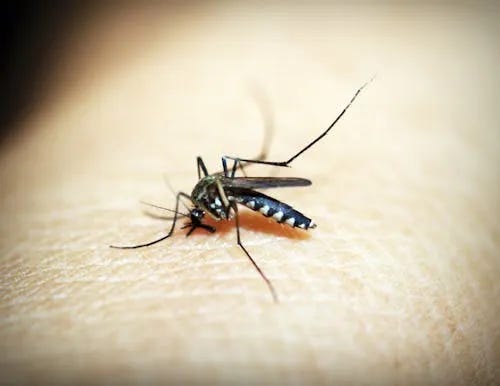
All summer long and continuing into autumn, we get inundated with mosquitoes. As hard as I try to keep our yard free from sources of standing water, the little blood suckers still find homes in neighboring ditches, puddles, ponds, and the surrounding swamplands.
Why Are Mosquitoes Such a Nuisance?
Some folks fear them as a health risk. It’s true. Mosquitoes can carry germs. However, out of the 200 species of mosquitoes that live in the continental United States, only 12 types carry viruses and parasites that can infect people and animals. So I’m not all that worried about getting sick.
What drives me and probably every else insane is that the mozzies are persistent little buggers with only one thing on their minds — getting another slurp of blood. They never stop pestering us. It’s impossible to go outside, even for just a few minutes, without them hunting down another victim. Their bite hurts and then itches like crazy for days. I keep telling myself it’s only the females attacking me. The male mosquitoes mind their own business and are actually beneficial pollinators. But it doesn’t change my feelings toward them. The skeeters have got to go.
Damselflies, dragonflies, bats, birds, and other predators do all they can to control them, but the good guys are decreasing in number while the bloodsuckers keep multiplying. Is there more we can do without harming the beneficial creatures?
That’s where the dilemma lies. How do we eliminate mosquitoes without harming other creatures or the environment?
Getting rid of adult mosquitoes requires spraying high concentrations of insecticide over large areas. Our local aerial applicator (otherwise known as an ag pilot or crop duster) assured me that the tiny droplets of spray do no harm to bees or other insects. Unfortunately, that’s not true. Beneficial insects are eliminated as well. The loss of pollinators and predatory bugs significantly impacts humanity’s food sources and well-being.
And it’s not just people who suffer. Birds and other creatures rely on insects as well. Bugs and caterpillars are essential food sources necessary for their survival.
Is there an alternative?
Yes, there is, but it requires us to change our tactics. According to Douglas Tallamy, an entomologist at the University of Delaware, we should approach the mosquito problem from a different angle. Instead of mass spraying to kill the adults, we should concentrate on controlling them at the larval stage.
By making larval traps, we can lure adult mosquitoes to lay their eggs in specific locations. Then, the developing larvae can be destroyed within the traps with a commercially available mosquito dunk tablet containing Bacillus thuringiensis (Bti), a natural larvicide.
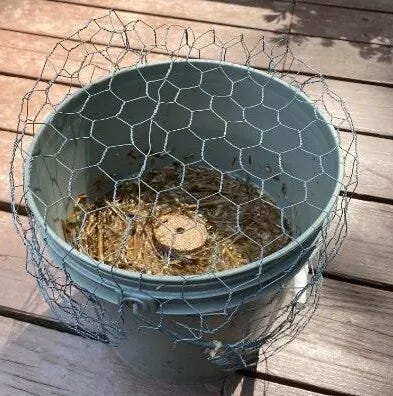
I’ve researched Bti and found it is a biological or naturally occurring bacterium generally found in soils. It contains spores that produce toxins that specifically target and kill the larvae of the mosquito, blackfly, and fungus gnat.
Is Bti safe?
It’s better than what we’re doing now! And I trust Dr. Tallamy. He is considered the go-to expert on insects, native vegetation, and restoring the land back to the way Mother Nature intended. His books and lectures on environmental conservation are very popular and have inspired many people to stop using pesticides and convert their lawns to more natural habitats. I don’t think he’d recommend anything that would harm the environment or any of the creatures that share our planet with us.
I believe this is worth a try. What do you think?

Thank you for reading my article. Please use the buttons below to Like, Comment, Restack, and Share my post on Substack and other social media platforms.
All my articles are free, so I’d be grateful if you would Buy Me a Brownie to support my work and help spread our love for Mother Nature worldwide.
Nature has a wonderful way of dealing with our issues when we leave it alone to do so.... Slugs and snails are a major problem for example but by encouraging our hedgehog population we see less of the slugs. Same with aphids - encourage the birds and the blue tits, robins take care of them. As our climate changes we will have to be more flexible with our solutions no doubt.
I've had my concerns about blanket spraying for those little pests, too. Claims that other species are not harmed have never made sense to me. Every time we try to beat nature at her proper game there are consequences we are not prepared for. A huge example is the forest fires we are fighting now. Those are the result of decades of mismanagement of the forests. We seem to always think we know better than nature. We don't. So if that tablet and plan works we need to embrace it.