

Fighting Fire with Fire

To be good stewards, we need to follow Mother Nature’s examples and try to mimic her actions. Yet, sometimes that may be contradictory to what we think is right. Like with the use of fire. We grew up with Smokey the Bear instructing us to prevent fires, which is 100% right. We do not want unintentional forest fires!
On the other hand, nature has shown us that burning is a necessary element for the health of many ecosystems. In woodlands, fire germinates seeds, exposes the forest floor to sunlight, and transforms leaf litter and other debris into rich nutrients for the soil.
We can also fight fire with fire by using low-intensity burns to clear thick stands of shrubs and brush that fuel high-intensity wildfires.
It’s not only forests that benefit from fire. In prairies, charred grasses become fertilizer for the new tender shoots favored by the grazing animals and clear the way for beneficial plants.
Indigenous communities tend to be more in tune with the natural world and understand how to live in harmony with all living things by watching, observing, and learning. Generations ago, they saw how fire cleansed woodlands and grasslands of old growth and debris, keeping them fertile and ready for new growth. They adapted this practice into their culture.
With the influx of European immigrants into what would become America, land management practices changed to strict fire suppression policies resulting in overgrown, less resilient forests and prairies. Therefore, fires burned hotter, destroying everything in their path. What used to be beneficial fires became raging infernos.
Now, in the 21st century, other folks are finally waking up to what native Americans have known all along. Controlled or prescribed burning is necessary. Unfortunately, not everyone has caught on, though. I read this in the National Wildlife Federation’s blog:
In the longleaf pine ecosystems that range from southern Virginia to eastern Texas, fire opens the understory up, providing ample hunting opportunities for native wildlife; increases diversity and abundance of vegetation; and maintains the habitat of keystone species like the red-cockaded woodpecker, among other benefits. However, concerns about damage to infrastructure can feature prominently in public and private opinion, which can hinder natural and prescribed burning.
People are afraid of wildfire and rightfully so! High-intensity wildfires burn indiscriminately. The fires originate through human vectors such as runaway campfires, burning leaves, etc., or are deliberately set by arsonists. Nature herself can spark a blaze when lightning ignites dry timber. What creates the inferno is the abundant fuel on the ground feeding its furious track.
Controlled fires are a totally different animal. Granted, sometimes they can get out of hand, but most of the time, the burn remains contained in a specific area. Many factors go into planning a prescribed fire –availability of trained professionals to have on site, time of year, weather, winds, condition of vegetation, etc.
In my former neck of the woods, the Lewis Ocean Bay Heritage Preserve in Conway, SC boasts the only remaining wild population of Venus Flytraps in South Carolina. It grows in nutrient-poor soils along the coastal plain of the Carolinas. This plant gets most of its energy through photosynthesis but also receives some of its nutrients from digesting insects too. A small spider, ant, or other tiny insect crawling across a leaf brush against tiny hairs that trigger the leaf to snap shut.
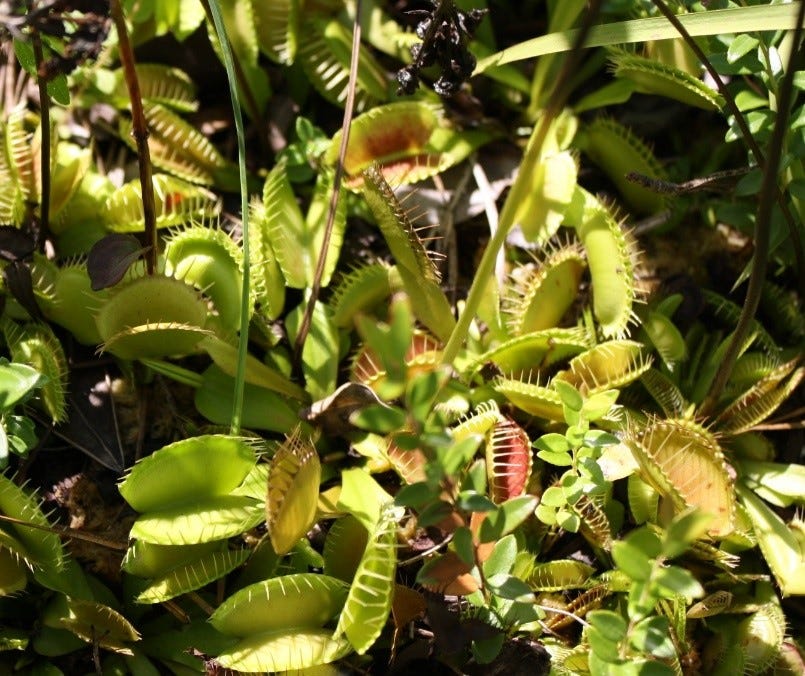
Venus flytraps need an understory free from any competing vegetation. They depend on fire to clear the area and create favorable conditions for seed germination in the ash and sandy soil after a burn.
Every year, a prescribed burn in the preserve provides the proper conditions for this rare plant to thrive.
This is just one example. There are hundreds, thousands of positive benefits from following nature’s lead and using low to moderate-intensity fires.
Reducing forest density. Low to moderate-intensity fire helps reduce density by removing the weakest trees, the ones susceptible to disease and insect infestations. It also returns nutrients to the soil and makes the remaining trees more resilient.
Improving wildlife habitat. Fire opens the forest canopy and creates opportunities for new vegetation to grow. It also creates snags, or dead trees, that are important to many endangered bird and bat species.
Increasing biodiversity. Controlled burning reduces competition from invasive species and encourages the growth of fire-adapted native vegetation, making forests more resilient against severe wildfires.
Lessening the severity of wildfires. Low to moderate-intensity fire reduces the risk of severe wildfires by reducing the number of fuels in the forest, such as leaf litter, pine needles, and shrubs. This protects larger trees from high-severity blazes that can be catastrophic to forest ecosystems.
Good stewards wear many hats. Some responsibilities are tougher than others, but they all result in helping Mother Nature retain her delicate balance. What hat will you wear today?
Thank you for reading my article. Please use the buttons below to Like, Comment, Restack, and Share my post on Substack and other social media platforms.
All my articles are free, so I’d be grateful if you would Buy Me a Brownie to support my work and help spread our love for Mother Nature worldwide.

Yes it’s about getting back to a simpler, slower life with food production more locally based not on the whims of huge corporations which make us obese, destroy nature with pesticides & count their piles of money not the quality of our lives.
We are now paying the price of not heeding the wisdom of "savages" . The indigenous peoples knew how to be good stewards of the forests but we thought we knew better. So sad.